Jiho Givenchy: From Gangnam to “Everyone Knows Me”
Born John Jiho Jeong in 1991 in Seoul’s Gangnam district, Jiho immigrated to the U.S. as a child and has been aggressively branding his life as a luxury origin story ever since.
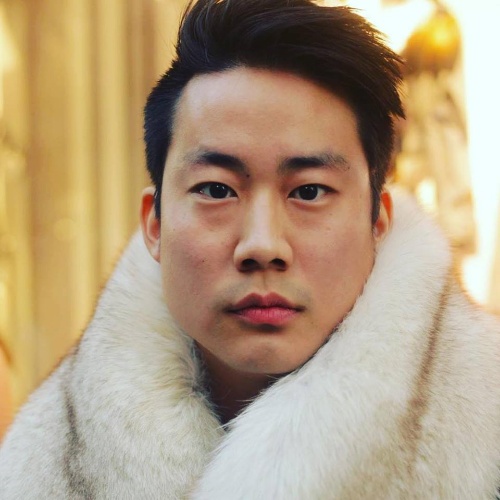
According to Jiho himself, he arrived in America at age ten with no English, no cultural footing, and somehow still managed to land in elite social circles by college. How? Fate. Vibes. Hanging around “the right people at the right time.”
He attended a private university in Manhattan, claims to have studied law, despite the small inconvenient fact that the U.S. does not offer undergraduate law degrees, and later implied he worked as a banker, a claim that floats in the same area of reality as his belief that The Secret can buy you a building if you believe hard enough.
But none of that really matters, because the real degree Jiho earned was in Being Seen.
By his early twenties, he was attending fashion shows, floating dramatically in Washington Square Park for Instagram, and collecting photos with celebrities like Pokémon cards: Miranda Kerr, Kanye West, J. Cole, Pharrell, Post Malone. Whether these encounters were deep relationships or five-second photo ops is beside the point. The point is: the pictures exist, and Jiho will make sure you see them.
Back in 2016, a lifestyle interview crowned him “Mogul of the Millennials,” breathlessly describing his 30k-follower Instagram as proof.


He talked about brunch like it was a military operation (“two beers minimum”), namedropped Bagatelle and Catch, and described his greatest achievements as styling the Victoria’s Secret Fashion Show and having a drunken conversation with Kanye West, an anecdote that has aged exactly how you’d expect.
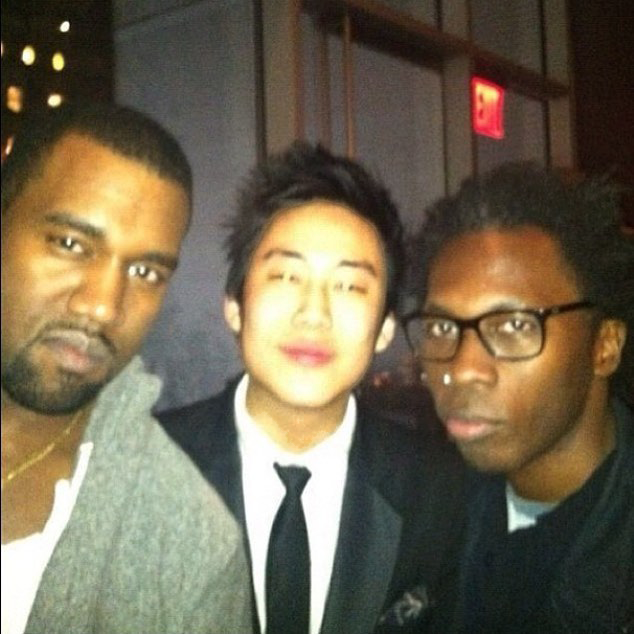
The Aesthetic & Clout Chasing Is the Achievement
Jiho Givenchy’s entire public persona rests on a very specific fantasy: that proximity to wealth, fashion, and Black hip-hop culture equals belonging. He loves color. He loves animal fur. He loves standing out. He loves telling you that he loves standing out.
He’s described himself as an influencer, stylist, designer, entrepreneur, rapper, YouTuber…basically every title that suggests importance without requiring consistency.
Over the years, he’s launched clothing projects on Instagram, ran (and closed) a hyper-clean bar/restaurant in Seoul stocked with Las Vegas sand and Dyson fans, and cultivated a reputation for extravagant nightlife behavior that often feels less “eccentric genius” and more “rich kid performance art.”
There are anecdotes, circulating for years, about him pouring expensive drinks for people at clubs only to throw them away while demanding they accept them “properly.”
There’s the infamous habit of wiping cans with tissues before drinking. There’s the spitting before rapping, his supposed “signature.” Every detail feels carefully designed to be memorable, whether for the right reasons or not.
And then there’s music.
Rap Career: Main Character Energy, Side Character Results
Jiho debuted as a rapper in 2019 with the delicately titled single 100 Bitches On My D, later releasing an album called WHOLE LOTTA CASH. If you’re sensing a theme, congratulations—you understand branding better than he does.
His repeated appearances on Show Me The Money (seasons 6, 8, 9, 11, and 12) turned him into something of a recurring character rather than a serious contender. While Jiho insists he’s misunderstood, the judges and editing consistently painted a different picture: distracted, unserious, more focused on antics than bars.
Season 8 was his peak. He was introduced as “a person from another world,” danced during teammates’ verses, interfered with performances, and famously shouted about rappers being “Mickey Mouse” while tanking the room’s energy.
Producers were unimpressed. Other rappers were annoyed. The internet? Delighted. He became meme material, not music material.
Later seasons followed the same pattern: brief appearances, fast eliminations, louder personality than talent.
Even when judges acknowledged he could “spit like a rapper,” the consensus was this is not rap. Still, Jiho persisted, because persistence itself is part of the brand.
The Psick Show Disaster: When the Mask Slipped
If Show Me The Money raised eyebrows, Jiho’s appearance on Psick Show set them on fire.
The episode opened awkwardly and somehow got worse. Jiho arrived with a Black man he referred to as his “bodyguard,” refused to let him sit, told the hosts to pretend they couldn’t see him, and laughed through the discomfort.
He then claimed this man was “his blood” because of an alleged African ancestor several generations back, repeatedly insisting that his “heart and soul are African.”
What might have been intended as edgy humor landed instead as something far uglier: a Black man treated like a prop, an accessory to validate Jiho’s imagined proximity to Blackness. He handed him items to hold. He hugged him awkwardly. He doubled down. The hosts looked visibly uncomfortable. Filming ended abruptly.
For many Black fans, especially those already exhausted by K-hip-hop’s long history of borrowing Black culture without accountability, the moment wasn’t too shocking.
Clips resurfaced. Reactions poured in. Calls for an apology followed. Those familiar with Jiho were skeptical he’d ever offer one.
Seoul Clout Remembers: The Deleted Era
Let me be very clear here. This isn’t something I read on a forum or pieced together after the fact. I personally remember Jiho Givenchy’s content from around 2017–2018, back when his online presence was way less polished and way more…unhinged.
This was the era when he was openly posting chaotic video clips of himself clout chasing rappers, loitering around nightlife spaces, and performing proximity like it was a sport.
(In present time, though you won’t find clips of Jiho acting out in public at clubs and lounges. You best believe I saw it with my own eyes in Apgujeong as recent as 2023 or 2024, so do what you will with that information).
Back then, Jiho wasn’t subtle about how badly he wanted to be seen as part of Black hip-hop culture.
In clips that circulated at the time (and have since conveniently vanished), he appeared to casually use the n-word, throwing it around like an accessory, the same way he throws around designer labels and celebrity selfies.
And then, shockingly, the content disappeared.
The moment Jiho started orbiting Korean artists more seriously, those videos were wiped clean. The wildest clips? Gone. The raw, reckless behavior? Most of it scrubbed from the internet.
Somehow I managed to find this slip-up though:
For those of us who were actually online at the time, the pivot was obvious.
His behavior simply got edited. And that’s why moments like the Psick Show incident didn’t feel shocking to longtime viewers.
They felt familiar. Like watching someone slip back into an old character they thought they’d buried under luxury branding and selective memory.
You can delete videos, but you can’t delete patterns.
What do you of Jiho? Have you seen him around Seoul clubs and pubs making a fool of himself (allegedly)?
Disclaimer
This blog is an opinion and commentary platform. The views expressed here are my personal opinions, interpretations, and analysis of publicly available material. Commentary on public figures and online narratives falls within the scope of protected free expression under the First Amendment to the United States Constitution.
Nothing in this post is intended as harassment, defamation, or a statement of undisclosed fact. Readers are encouraged to review original sources and form their own conclusions.
Leave a Reply